Rupee rises 14 paise to 94.61 against dollar in early trade

The rupee gained 14 paise to 94.61 against the US dollar in early trade on 4 November 2026, helped by softer crude, a weaker dollar and foreign inflows.

Finance.net.in title card: Rupee rises 14 paise to 94.61 against dollar in early trade

Key points

  • The rupee rose 14 paise to 94.61 against the US dollar in early trade on Wednesday, 4 November 2026.
  • It had closed at 94.75 on Tuesday, up 9 paise.
  • Softer crude, a weaker dollar and foreign inflows supported the currency, according to forex traders.
  • FIIs were net buyers for a third straight day, purchasing equities worth ₹6,836.81 crore on Tuesday.

What happened

The Indian rupee gained 14 paise to quote at 94.61 per US dollar in early deals on Wednesday, 4 November 2026. A paisa is one-hundredth of a rupee. Reports in BusinessLine, The Hindu and the Economic Times, all based on PTI, linked the gain to cheaper crude oil, a softer dollar and money coming in from foreign investors.

In the interbank foreign exchange market, where banks trade currencies with each other, the rupee opened at 94.61. It touched 94.50 before giving up some gains and settling back at 94.61. On Tuesday, 3 November, it had closed 9 paise higher at 94.75.

Global and domestic cues

  • The dollar index, which tracks the US dollar against a basket of six currencies, stood at 101.17, down 0.54%.
  • US Treasury yields (the return on US government bonds) fell, as traders anticipated the Democratic Party doing well in the US midterm elections.
  • Brent crude, the global oil benchmark, slipped 0.49% to $103.09 a barrel in futures dealings, while geopolitical uncertainty persisted.
  • The Sensex rose 435.10 points, or 0.57%, to 77,352.95 in early trade. The Nifty gained 115.90 points, or 0.49%, to 23,925.10. Both had ended over 1.5% higher in the previous session.

Foreign Institutional Investors (FIIs) were net buyers for the third consecutive day on Tuesday, buying equities worth ₹6,836.81 crore, according to exchange data.

Forex traders said investors were also waiting for the outcome of the US midterm elections.
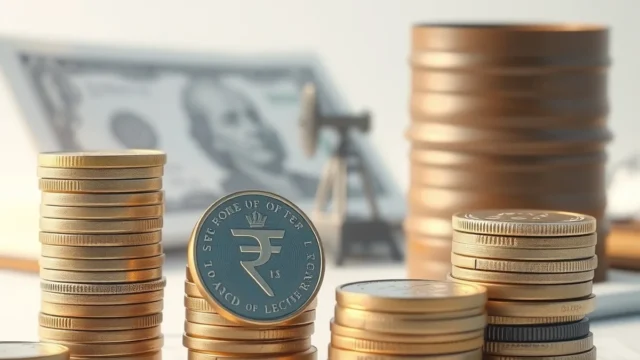
The rupee rose 14 paise to 94.61 against the US dollar in early trade on Wednesday, 4 November 2026.

What it means for you

A stronger rupee means each dollar costs slightly less. At 94.61, $1,000 would cost about ₹94,610, against about ₹94,750 at Tuesday’s close. The gap is small, but it matters to people paying in dollars, such as for foreign travel or overseas tuition. For NRIs sending money to India, a stronger rupee means slightly fewer rupees per dollar sent. You can check live numbers with the Currency Converter.

Background

The rupee’s level against the dollar is shaped by oil prices, since India imports much of its crude, by the dollar’s global strength and by foreign fund flows. Our rupee reference rates for 3 November 2026 show the dollar at ₹94.75.
What it means for you

A marginally stronger rupee lowers the rupee cost of dollar payments such as foreign travel or overseas fees. For NRIs remitting money home, each dollar converts into slightly fewer rupees. Day-to-day moves are small and can reverse.

Currency Converter Money Transfer to India Calculator

Frequently asked questions

At what level did the rupee trade on 4 November 2026?

The rupee opened at 94.61 against the US dollar, touched 94.50 and then traded at 94.61 in early trade, up 14 paise.

Why did the rupee rise?

Forex traders cited receding crude oil prices, a weaker US dollar and foreign fund inflows, along with buying in domestic equities.

Where did the rupee close on 3 November 2026?

It rose 9 paise to close at 94.75 against the US dollar.

Sources

  1. Rupee rises 14 paise to 94.61 against US dollar in early trade — BusinessLine — Markets
  2. Rupee rises 14 paise to 94.61 against Us dollar in early trade — Economic Times — Markets
  3. Rupee rises 14 paise to 94.61 against U.S. dollar in early trade — The Hindu — Business

Understand the basics

More in the Knowledge Base →

This article is for information only and is not investment, tax or legal advice. Figures are from the sources linked above as of the publish or update time. Please verify with official sources or a qualified adviser before making financial decisions.