
What happened
Apple shares fell as much as 4.5% in extended trading on Monday, 2 November, after the company’s guidance for the current quarter disappointed investors, according to CNBC-TV18. This came even though its fourth-quarter results for fiscal 2026 beat expectations.
Apple reported revenue of $114.48 billion against analyst estimates of $113.39 billion. Its earnings per share (EPS), the profit attributable to each share, was $2.1 against an expected $1.99. Tariff refunds added 5 cents to EPS.
Segments and China
- iPhone and Mac revenue came in above estimates.
- iPad and other products revenue was below expectations.
- Wearables, Home and Accessories revenue of $31.57 billion matched estimates.
- China sales rose 21% from a year earlier to $17.5 billion, but fell short of expectations by $1 billion.
The guidance that moved the stock
For the current quarter, Apple expects revenue to grow 7% to 10%. That is above the 6.4% analysts were looking for on average, but slower than the 12% growth in the fourth quarter.
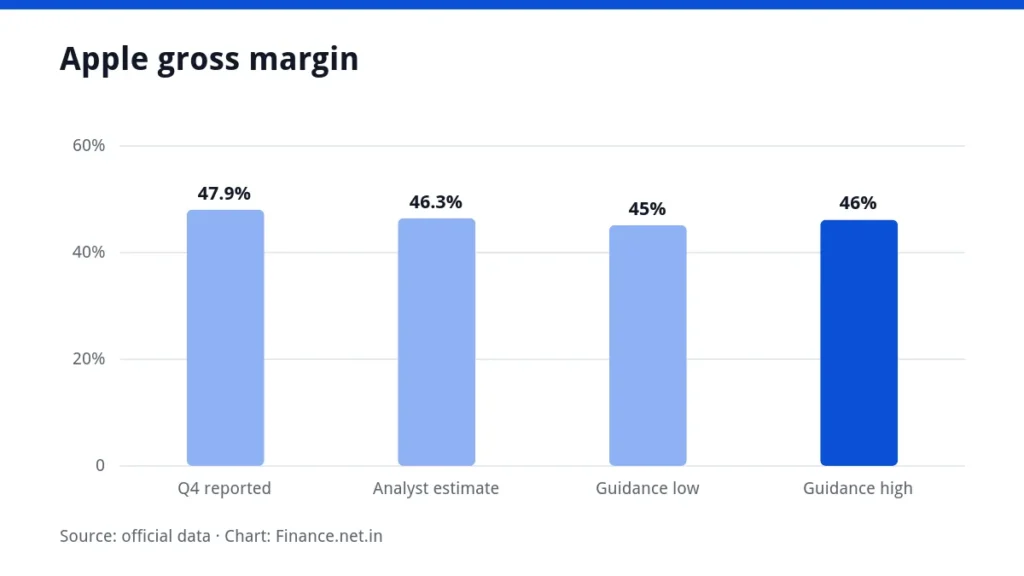
Gross margin, the share of revenue left after the direct cost of making products, is expected at 45% to 46%. The average estimate was 46.3%, and the fourth quarter figure was 47.9%.
The shares pared some losses after new CEO John Ternus expressed strong optimism about what lies ahead for the company. They were down 2.7% in extended trade, after closing 1.8% lower in regular trade.
What it means for you
If you hold Apple shares directly, through a US-focused fund or through an international investing platform, the after-hours move shows how much weight markets gave to forward guidance over a quarter that beat estimates. Extended trade is trading outside regular market hours, and prices there can change by the time regular trading opens.
Ternus also said the standard iPhone 18 and the new iPhone Air are slated for the first half of 2027, not this autumn. Apple has typically unveiled new phones in September, but this year only the iPhone 18 Pro line has been released.
Background
The latest quarter was the first full one since Apple raised prices in June, citing difficulties in sourcing memory chips and other components. iPhone prices went up by as much as $100.
Over the last six months, the stock has gained 22%, adding more than $1 trillion to Apple’s market capitalisation, the total value of its shares.