Every Dhanteras, someone in the family buys a silver coin or a pair of payals, and every few years someone asks whether silver is a better buy than gold. Investing in silver today does not have to mean a locker full of utensils. You can buy hallmarked coins and bars, or units of a silver exchange traded fund (ETF) or a fund of funds, each with its own costs, taxes and safeguards.
This guide walks through each route: how the new HUID hallmark on silver works, how SEBI-regulated silver ETFs hold real metal, what GST you pay, how gains are taxed after the 2024 changes, and what moves the silver price. It does not tell you how much to buy or when. That depends on your goals, and silver can swing far more sharply than most people expect.
Why people buy silver, and what makes it different from gold
Silver plays two roles. Like gold, it is a precious metal that families hold as a store of value and for ceremonies. Unlike gold, a large part of silver’s demand comes from industry, because it conducts electricity and heat very well. It is used in electronics, solar panels, batteries and medical products.
That double life makes silver more volatile. When factories are busy, demand rises; when the world economy slows, industrial demand can fall at the same time as investors sell. Silver prices have historically risen and fallen faster than gold prices in both directions. Treat it as a small, high-risk slice of a portfolio, not as a safe replacement for fixed deposits or gold.
The main routes for investing in silver in India are:
- Physical silver: coins, bars, jewellery and articles such as plates, diyas and idols.
- Silver ETFs: mutual fund units listed on the stock exchange, backed by physical silver.
- Silver fund of funds: mutual fund schemes that invest in silver ETF units, bought directly from the fund house.
- Silver futures on a commodity exchange, which are leveraged contracts meant for traders and hedgers, not for most savers.
Physical silver and the BIS hallmark with HUID
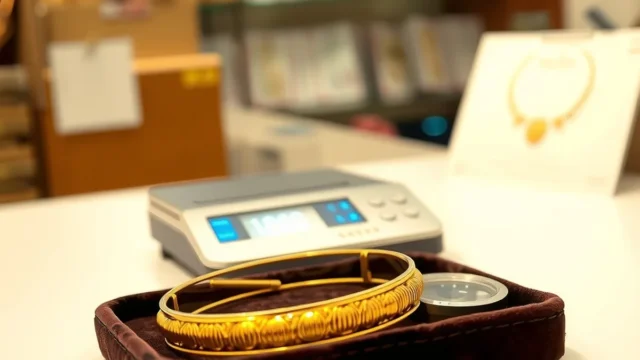
The biggest worry with physical silver is purity. A payal sold as “pure silver” may contain far less. The Bureau of Indian Standards (BIS) runs a hallmarking scheme for silver to deal with this. Silver hallmarking was first introduced on a voluntary basis in October 2005, and on 1 September 2025 BIS brought in Hallmarking Unique Identification (HUID) for silver jewellery and artefacts.
Hallmarking of silver is still voluntary for jewellers. But, as a government release of December 2025 explains, any silver article that is hallmarked must now carry a HUID. A hallmarked silver piece has three marks:
- The BIS standard mark with the word SILVER.
- The purity grade, in parts per thousand.
- A six-digit alphanumeric HUID, laser-marked on the article, unique to that piece.
The revised Indian Standard has seven purity grades: 800, 835, 925, 958, 970, 990 and 999. A 925 mark means 92.5% silver; 999 means 99.9%. According to the release, grades 925 and 800 make up nearly 90% of hallmarked items, and most hallmarked silver coins are of 990 fineness.
You can check any HUID on the free BIS CARE mobile app. Enter the code and it shows the purity, the type of article, the jeweller who submitted it for hallmarking and the assaying and hallmarking centre that tested it. If the details do not match what you are holding, do not buy.
| Hallmark grade | Silver content | Where you often see it |
|---|---|---|
| 800 | 80% | Payals, anklets, waist chains, diyas |
| 925 | 92.5% | Idols, plates, diyas |
| 990 | 99.0% | Most hallmarked silver coins |
| 999 | 99.9% | High-purity bars and coins |
For investment, coins and bars of 990 or 999 purity make more sense than jewellery. Jewellery carries making charges that you usually do not get back when you sell, and lower-purity alloys fetch less per gram.
Silver ETFs: how they work under SEBI rules
SEBI allowed mutual funds to launch silver ETFs through amended regulations and a circular dated 24 November 2021. The rules are designed so that the ETF tracks the price of physical silver:
- A silver ETF must invest at least 95% of its net assets in silver and silver-related instruments.
- The physical silver must be in standard 30 kg bars of 999 fineness that meet London Bullion Market Association (LBMA) Good Delivery standards.
- Exposure to exchange-traded silver derivatives is capped at 10% of net asset value, except where the fund intends to take delivery of the metal.
- The benchmark is the price of silver based on the LBMA silver daily spot fixing price.
- Tracking error, the deviation from physical silver’s returns over a rolling year, must not exceed 2%, and fund houses must disclose it monthly.
- Units are listed on stock exchanges, the fund house appoints market makers for liquidity, and the NAV is disclosed every day.
To buy a silver ETF you need a demat and trading account. You buy and sell units on the exchange like shares, during market hours, at the market price. You pay brokerage, and the fund deducts an annual expense ratio from its assets. There is no worry about purity, storage or theft.
Silver fund of funds: the no-demat route
A silver fund of funds is a mutual fund scheme that puts its money into units of one or more silver ETFs. You invest directly with the fund house or through a distributor or app, at the day’s NAV, with no demat account. You can also set up a monthly SIP, which suits people who want to add small sums regularly.
The trade-off is cost. You bear the fund of funds’ own expense ratio and, indirectly, the expenses of the underlying ETF. Some schemes also charge an exit load if you redeem within a set period. Compare the total expense and exit load in the scheme documents before you invest. To see how regular monthly amounts could add up over time, try the SIP calculator, but use a conservative return assumption, because silver’s returns vary widely from year to year.
Comparing the routes for investing in silver
| Feature | Coins and bars | Silver ETF | Silver fund of funds |
|---|---|---|---|
| Account needed | None | Demat and trading | Mutual fund folio |
| GST on purchase | 3% | No GST on units | No GST on units |
| Purity risk | Check hallmark and HUID | 999 bars held by fund | Through the ETF |
| Running cost | Locker, insurance | Expense ratio, brokerage | Two layers of expense, possible exit load |
| Holding period for long-term gains | More than 24 months | More than 12 months | More than 24 months |
GST on silver
Under the GST rate notification of 17 September 2025, silver in unwrought or semi-manufactured form or as powder, which covers bars and coins, falls in the 3% schedule. Articles of jewellery made of precious metal and silversmiths’ wares are in the same 3% schedule.
As an illustration, if you buy silver coins worth ₹50,000 before tax, GST adds ₹1,500. Jewellers often show making charges as a separate line, so ask for an itemised bill that lists the weight, purity, rate per gram, making charges and tax. Keep the bill; you will need it to work out your gain when you sell.
Units of silver ETFs and fund of funds are securities, so you do not pay GST on buying them. You do pay charges such as brokerage and the fund’s expenses, and GST may apply to those service charges.
How gains on silver are taxed
The capital gains rules changed for any sale made on or after 23 July 2024. CBDT’s FAQs on the change explain that there are now only two holding periods: one year for listed securities and two years for all other assets. The long-term rate is 12.5% without indexation, down from 20% with indexation.
- Physical silver: held for more than 24 months, the gain is long-term and taxed at 12.5% plus surcharge and cess. Held for 24 months or less, the gain is short-term and added to your income at your slab rate.
- Silver ETF: listed units held for more than 12 months give long-term gains at 12.5%. Shorter holdings give short-term gains taxed at your applicable slab rate, reported in the “applicable rates” row of the return.
- Silver fund of funds: units are not listed, so the two-year period generally applies. Mutual fund tax rules have changed several times since 2023, so read the scheme’s tax note or ask a tax professional before you redeem.
As an illustration, say you bought hallmarked bars for ₹2 lakh, including GST, and sell them after three years for ₹2.8 lakh. The long-term gain of ₹80,000 is taxed at 12.5%, which is ₹10,000 before surcharge and cess. Without a purchase bill, proving your cost becomes difficult. Tax year 2026-27 is the first under the Income-tax Act, 2025, and the return forms for it keep separate rows for gains taxed at 12.5% and at applicable rates. The income tax calculator helps you see the effect of short-term gains on your total tax.
What moves the price of silver
No one can predict silver prices reliably, but it helps to know what pushes them around:
- Industrial demand. Growth in electronics, solar power and electric vehicles raises demand; a slowdown cuts it.
- Global prices and the dollar. Silver is priced internationally in US dollars. A weaker dollar has often coincided with firmer metal prices.
- The rupee. Indian prices follow global prices converted into rupees, so a falling rupee makes silver costlier here even if the global price is flat. You can check the exchange rate on the currency converter.
- Import duty and taxes. Changes announced in the Union Budget can move domestic prices overnight.
- Interest rates and investor mood. When rates fall or uncertainty rises, precious metals tend to attract buyers; when markets are calm and rates are high, interest can fade.
- Festive and wedding demand in India, which affects local premiums and discounts.
Before investing in silver: a short checklist
- Decide on a small share of your savings for silver and accept that its price can fall sharply.
- For coins and bars, buy only hallmarked pieces and verify the HUID on the BIS CARE app.
- Ask for an itemised bill showing weight, purity, rate, making charges and GST.
- For ETFs, check the expense ratio, tracking error and trading volumes.
- For a fund of funds, check the total expense and any exit load.
- Note the holding period: more than 12 months for listed ETFs, more than 24 months for physical silver.
- Keep all purchase records for tax.
Silver can add variety to a portfolio, but it works best as a minor holding next to your core savings. This guide is general information, not personal investment advice.