What it is
RTGS stands for real-time gross settlement. It is a payment system, usually run by a country’s central bank, that moves money between banks one payment at a time and as soon as each instruction is processed.
“Gross” means each payment is settled on its own, not netted against other payments. “Real time” means there is no waiting for a batch at the end of a cycle. Once settled, a payment is final.
Many countries run such a system. India’s central bank, the Reserve Bank of India (RBI), operates RTGS, and in the United Kingdom the Bank of England runs the RTGS service that sits behind CHAPS, the UK’s system for high-value payments. For a plain-language comparison of the Indian options, see our guide to NEFT, RTGS and IMPS.

How it works
When you ask your bank to send a large payment by RTGS, your bank passes the instruction to the central bank’s system. The system checks that your bank can cover the amount, then moves the money between the two banks’ accounts held at the central bank. The receiving bank then credits the recipient.
The contrast with batch systems such as NEFT is in the timing. NEFT groups payments and settles them in cycles, while RTGS settles each item individually. That is why RTGS is typically used for larger amounts, where finality matters more than cost or convenience.
Because so much money flows through it, the system must be reliable and secure. That depends heavily on the technology underneath, which is where the recent news comes in.
Why it is in the news
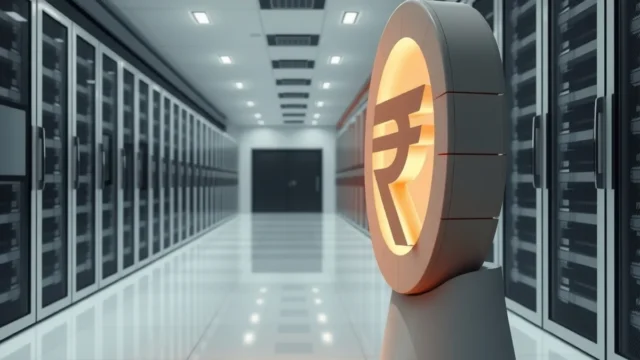
On 25 October 2026, Prime Minister Narendra Modi inaugurated the RBI’s new Data Centre and Cybersecurity Training Institute in Bhubaneswar, Odisha. Finance Minister Nirmala Sitharaman said the Data Centre is where the RBI’s most critical systems, RTGS and NEFT among them, will be hosted. The Training Institute, she said, is meant to develop skills in cybersecurity, artificial intelligence and other new technologies. Our report has more: PM Modi inaugurates RBI Data Centre and cyber institute.
RBI Governor Sanjay Malhotra said the central bank is committed to strengthening digital infrastructure and enhancing cybersecurity.
In the UK, the Bank of England published a summary of the second meeting of the RTGS CHAPS Industry Forum, held on 13 October 2026. See our note on the forum summary.
What it means for you
If you send or receive large payments, for example for a property purchase or a big family transfer, RTGS is the kind of rail your bank may use. Banks decide which channel to offer and what they charge, so check the details with your bank.
For NRIs moving money between countries, a domestic system like RTGS is only one part of the chain. You can estimate what a transfer to India may bring with our money transfer calculator.
The new data centre is about the resilience of the underlying systems. The sources do not describe any change in how you use RTGS or in its charges.