What happened
State-owned Indian Oil Corporation (IOC), India’s largest refiner, plans to buy crude oil and liquefied petroleum gas (LPG) carriers of its own, according to reports in BusinessLine and The Hindu. Disruption to shipping around the Strait of Hormuz and sharply higher freight costs are behind the move.
Director of Finance Anuj Jain said on the second-quarter earnings call that the board has already approved buying a few vessels and that tenders were issued several months ago. IOC is also looking at having ships built within India, tied to the government’s Make in India programme.
“The country needs oil sector companies to focus more on the shipping area now,” Jain said.
A shift in approach
IOC has so far relied on a mix of time-chartered vessels (ships hired for a fixed period at a pre-agreed daily rate) and voyage-chartered ones (hired for a single trip). It is now looking at three routes: improving existing charter arrangements, owning ships and supporting domestic shipbuilding.
Geopolitical tension in West Asia has raised freight rates and war-risk insurance costs, which makes secured shipping capacity more valuable.
Why charters have helped
IOC has three crude vessels and nine LPG vessels on time charter. Jain said these have delivered significant savings during the crisis.
- Time-chartered crude carriers cost about $2-2.50 per barrel, against spot rates of up to $8-10 per barrel.
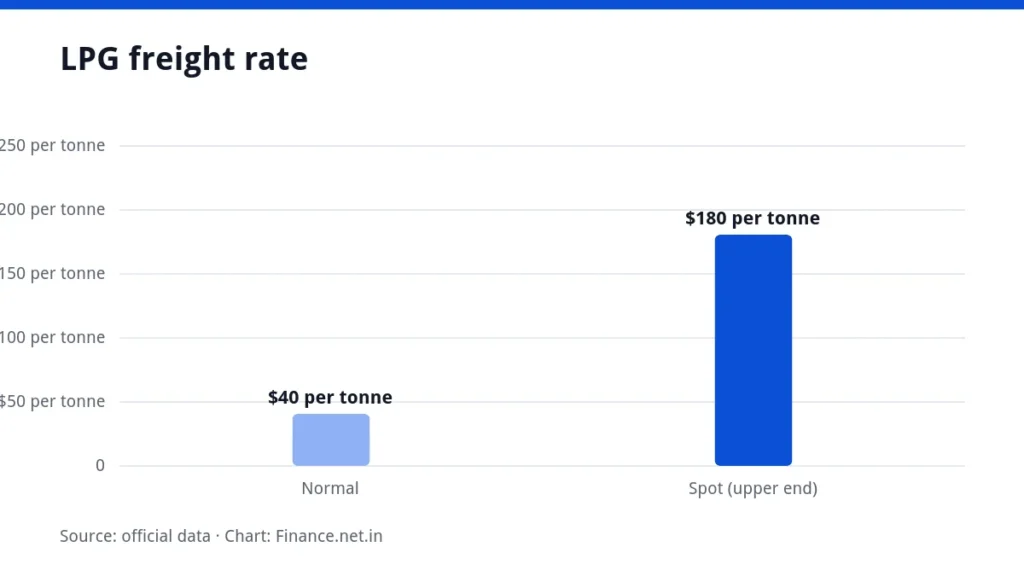
- LPG freight is normally around $40 per tonne but has risen to $160-180 per tonne on the spot market.
Crude sourcing and prices
In the first half of FY27, Russia supplied 55% of IOC’s crude and the Middle East 24%. Africa accounted for roughly a tenth, Brazil 7%, while the United States and Venezuela were smaller suppliers at 2-5% and 3-4%.
Spot purchases rose to about 87% of crude sourcing, from around 50% in the previous financial year. Over the September quarter, the premium or discount paid against benchmark crude ranged from a $5 per barrel discount to a $12 per barrel premium. The range in the previous quarter was zero to $18 premium.
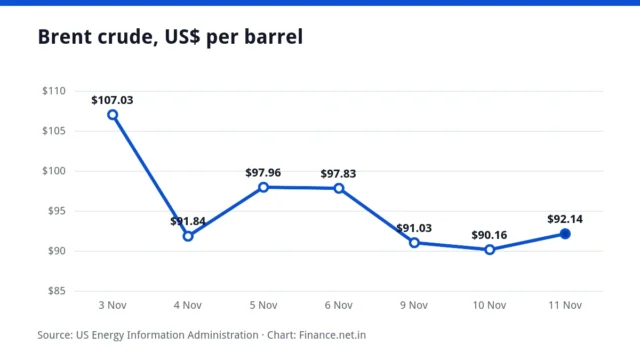
Jain said Indian basket crude averaged about $65-70 per barrel in February. It then stayed higher than $100 through most of the first quarter and averaged about $120 in October. He linked the rise to the escalation of US-Iran hostilities towards the end of February.
Results
IOC reported a September-quarter net profit of ₹21,630 crore, against a loss of ₹2,661 crore in the previous quarter and a profit of ₹7,610 crore a year earlier. The company said inventory gains and better performance across several businesses helped. Its gross refining margin, the money earned per barrel of crude processed, was $18.52 per barrel, excluding the special additional excise duty.
What it means for you
The report does not mention any change in fuel prices. What it shows is how a refiner is trying to limit exposure to freight and supply shocks, which Jain said remain a key uncertainty for crude procurement, freight and marketing margins.
IOC said it kept refineries running at optimal levels and raised crude stocks to about 39 days from the usual 33-35 days. It also held 20 days of LPG and 23-25 days of petrol and diesel stocks. If you follow oil company earnings, you can compare such results using our EBITDA explainer.
Background
India depends heavily on imported crude and overseas shipping routes. Other quarterly results we have covered include SBI’s Q2 profit and Bharti Airtel’s Q2 profit.