What happened
SBI Research says the government could scrap long-term capital gains (LTCG) tax and absorb a revenue loss of ₹40,000-50,000 crore in FY28, according to its Ecowrap report dated 2 November, as reported by Business Today and BusinessLine. That is about 0.1-0.2% of GDP, and the report argues it would fit within the government’s fiscal consolidation path.
LTCG tax is the tax on profit from selling an asset, such as shares, held beyond a set period. You can read the basics in our guide to capital gains.
Why SBI calls it affordable
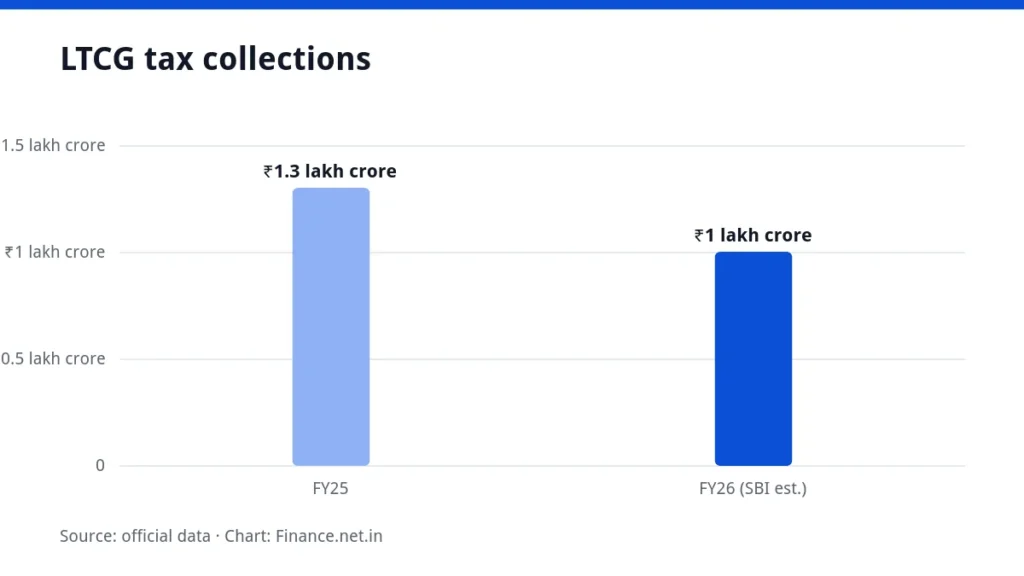
The government collected about ₹1.3 lakh crore of LTCG tax in FY25, according to a parliamentary reply cited in the reports. SBI says that figure was unusually high because equities had returned nearly 30% in the preceding year, when investors booked gains.
Conditions have changed, SBI says. The average Nifty return over FY25-FY27 so far is just 0.5%, and cumulative foreign institutional investor outflows have reached ₹4.8 lakh crore. Using an econometric model, SBI puts LTCG collections at about ₹1 lakh crore in FY26 and ₹40,000-50,000 crore in FY27.
The report said the government could take the hit if all capital gains taxes were hypothetically abolished.
Alternatives SBI suggests
- Raise the annual LTCG exemption from ₹1.25 lakh to ₹2 lakh and link it to inflation.
- Keep the 12.5% rate for holdings of one to two years, cut it to 5% for two to three years, and make gains on holdings beyond three years tax-free.
- Raise securities transaction tax (STT, a small tax charged on each share trade) by 50%, which SBI estimates could bring about ₹45,000 crore in FY28.
- Defer LTCG tax on mutual fund redemptions if the money is reinvested in eligible equity mutual funds within 90 days.
SBI Research first proposed abolition in its 12 October Ecowrap report, arguing it could attract foreign capital and improve sentiment.
What it means for you
Nothing changes for your tax bill today. SBI’s ideas are recommendations, and the government has announced no decision to abolish or reduce LTCG tax.
If you invest in shares or equity mutual funds, the debate points to growing attention on capital gains rules before the next Union Budget. For now, current rules apply, including the ₹1.25 lakh annual exemption and the 12.5% rate mentioned in the report. You can estimate your own liability with the income tax calculator.
Background
Speaking at the Financial Express Leadership Awards 2026 in Mumbai, Finance Minister Nirmala Sitharaman acknowledged the anxiety among retail investors and equity participants. She said, “I’ll consider all this,” but announced no specific change. She also noted that the tax structure was similar in 2023-24, when foreign inflows were much stronger, and said, “We need to be fiscally prudent.”
The fiscal picture is tighter. SBI estimates the FY27 fiscal deficit could exceed the Budget estimate by about ₹1.2 lakh crore, reaching 4.7% of GDP against the budgeted 4.3%. It cites excise duty cuts and higher fertiliser and petroleum subsidies. SBI still believes stronger cash balances and expenditure rationalisation give some room.
What to watch next
The next Union Budget will show whether any of these ideas are taken up. Until then, they remain proposals.